
Even though I like to consider myself a gym movement specialist, the universe has designated for me a number of other seemingly unrelated tasks. These include dog entertainer, horse therapist, collector of random facts (my husband has nicknamed me Cliff Clavin), food enthusiast (both cooking and eating), and applying math to all things.
When people find out I have a background in fitness, they almost always invariably ask me about nutrition and weight loss. My answer is always the same: Track your diet for a week and see what you find out. Most of the time, its pretty easy to see where the problems are when its written down in front of you. If folks can manage to do that, then I can step in and give them some advice on how to make the small, gradual changes that will improve their health and fitness over time. The most basic recommendations are usually somethings like this depending on the individual:
- Consume at least 80 grams of protein a day from lean protein sources.
- Drink at least 64 oz of water a day.
- Eat a minimum of 25 grams of fiber day (more is better, but you have to be careful about ramping up too quickly to avoid discomfort).
- Try to keep your fat intake between 40 and 85 grams a day.
- Avoid processed foods as much as possible.
- Minimize your sugar intake.
- Eat the majority of your calories around your most active times of the day.
If you have trouble hitting these numbers every day, which most people do, think about taking the approach of hitting those numbers as an average over the course of a week.
Regardless, its much easier to avoid eating junk and getting your recommended nutrients if you plan ahead. And that is where math is important.
I tell people all the time to read their nutrition labels, but most people don’t. Most people don’t know the difference between a carbohydrate, a sugar, a starch, or fiber. (The last three are all carbohydrates, but fiber is only digestible by our gut bacteria which is incredibly important for both our physical and mental health.) People still ask me if nuts are a good protein source. (Nuts have protein, but are a much better source of fat.) I can go on and on.
I’m not trying to nutrition shame anyone, its a lot of information that most of us don’t have time to memorize.
In my quest to maintain my weight through middle age and menopause, I have tried ordering some of the already prepped meals online from a few different companies, but to be honest, I just don’t care for them. Flavor and protein content tend to be sorely lacking and I just don’t find them appealing. If you have found a service you like and consistently use, that’s awesome. But I adhere to the rule that healthy food is only good for you if you actually eat it.
In this post, I’m going to walk you through meal prepping some burritos I make for breakfast and/or lunch. Two of the best things you can do for your health is to get in the habit of eating breakfast and to get comfortable with eating non-traditional foods for breakfast. Starting your day with sugary cereal or pastries is a great way to find yourself hungry long before lunch. Protein, fiber, and some good fat will keep you satiated and give you the energy you need to get through your morning. I tend to be very active in the morning and not so much later in the day so I tend to eat the majority of my calories early in the day.
Beef Brisket Burritos with Black Beans and Tomatoes
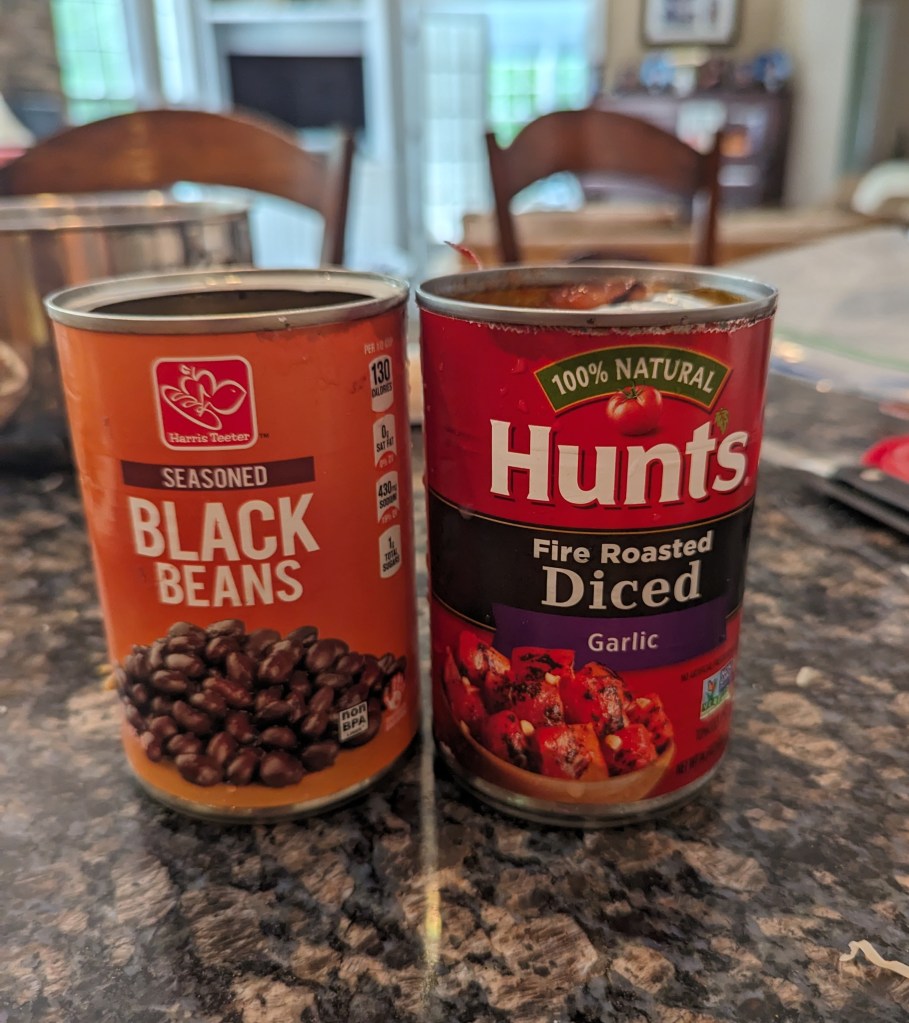
I slow cooked and shredded some beef brisket the other day for dinner so decided to make some burritos with the leftover meat. I am always looking for ways to add some fiber to my recipes so picked up a can of seasoned black beans and for flavor, a can of fire-roasted garlic infused tomatoes. Additionally, I really like the Mission Carb Control flour tortillas as they have 19 grams of carbs, 17 of which is fiber, and they taste good. And of course, some cheese. I use my food scale so I can measure all portions accurately.
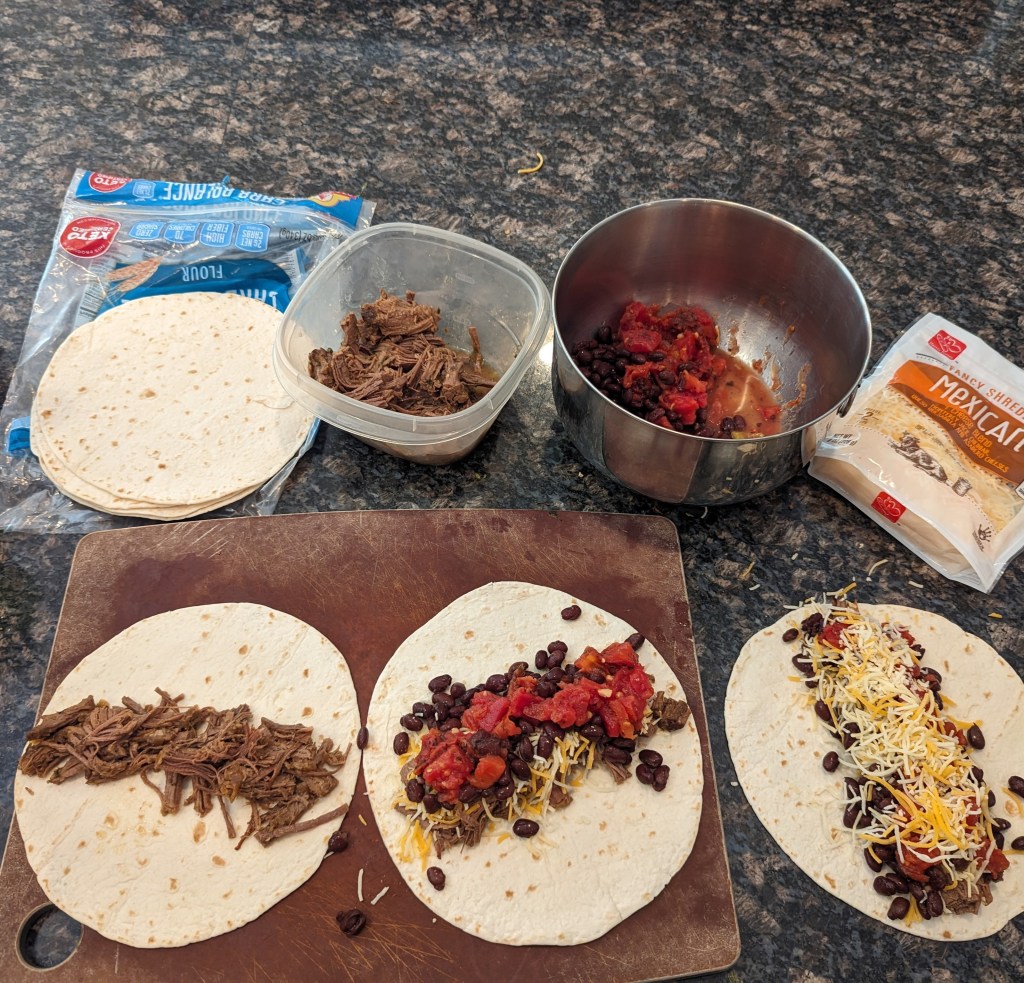
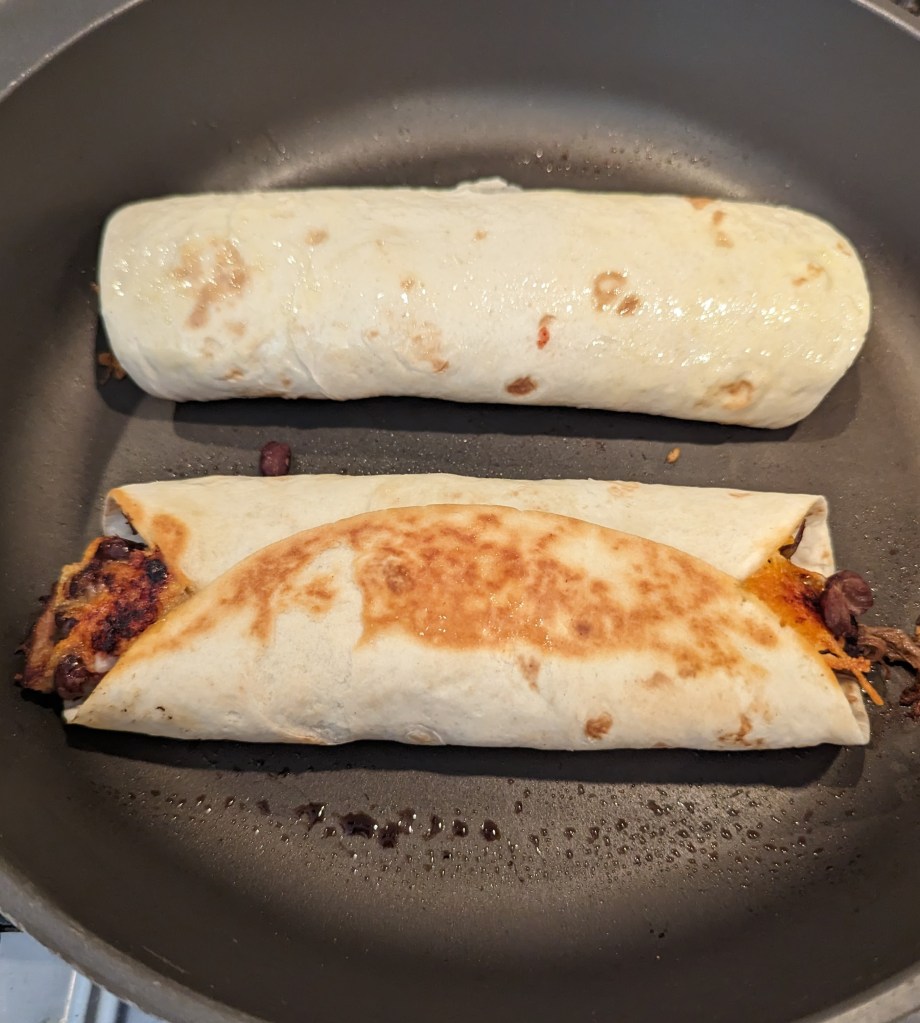
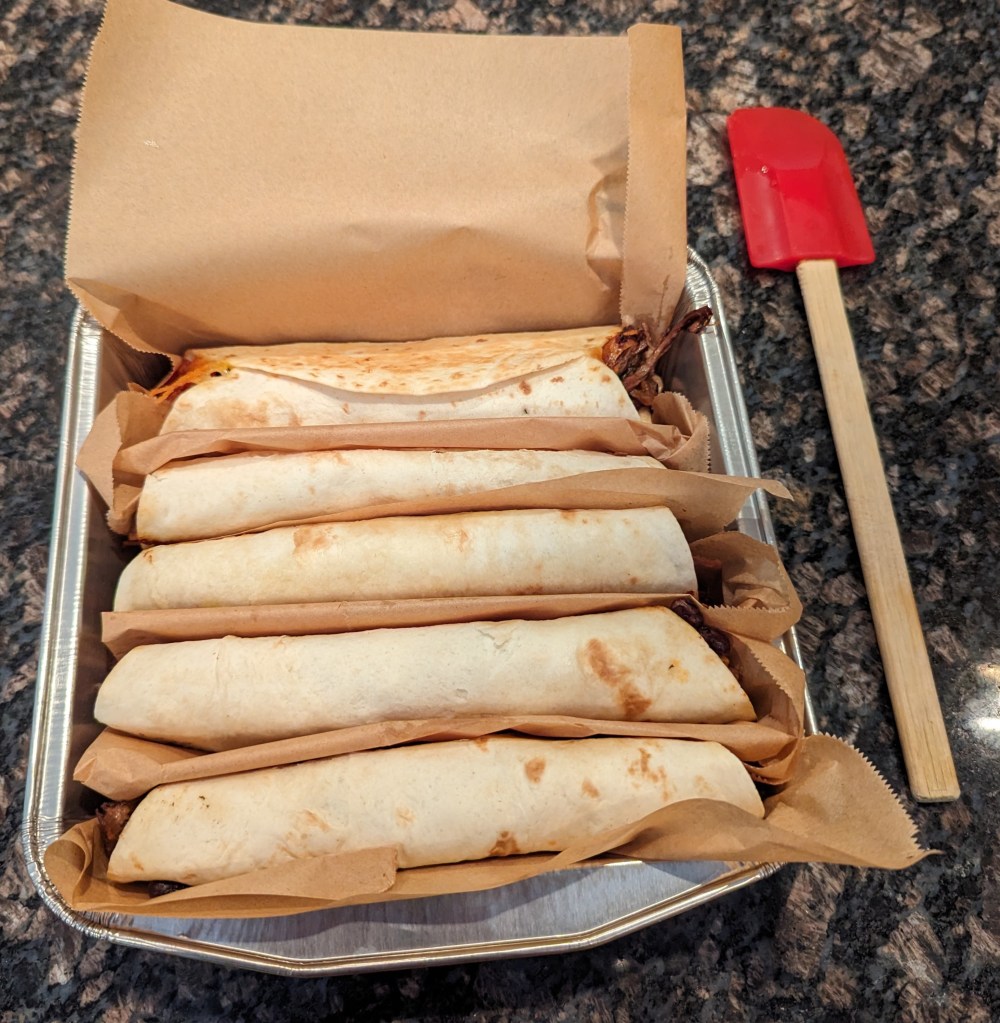
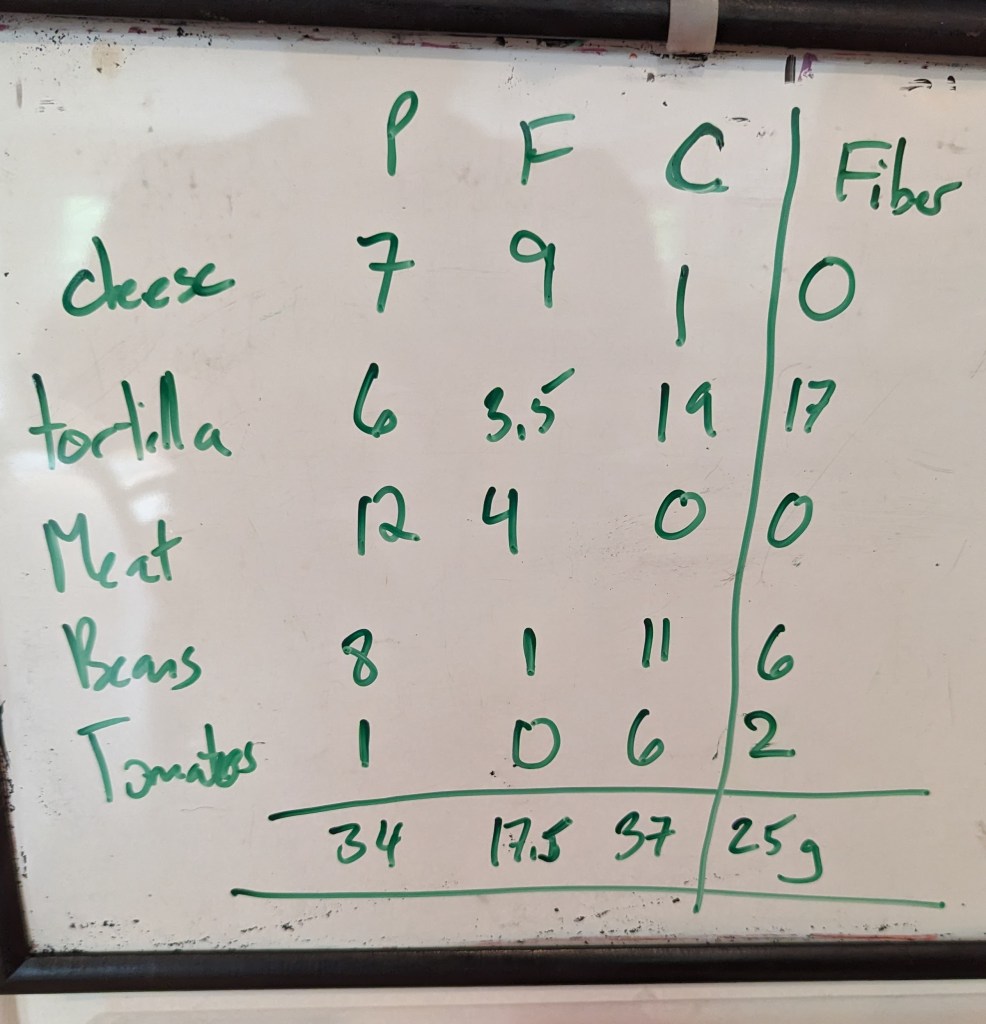
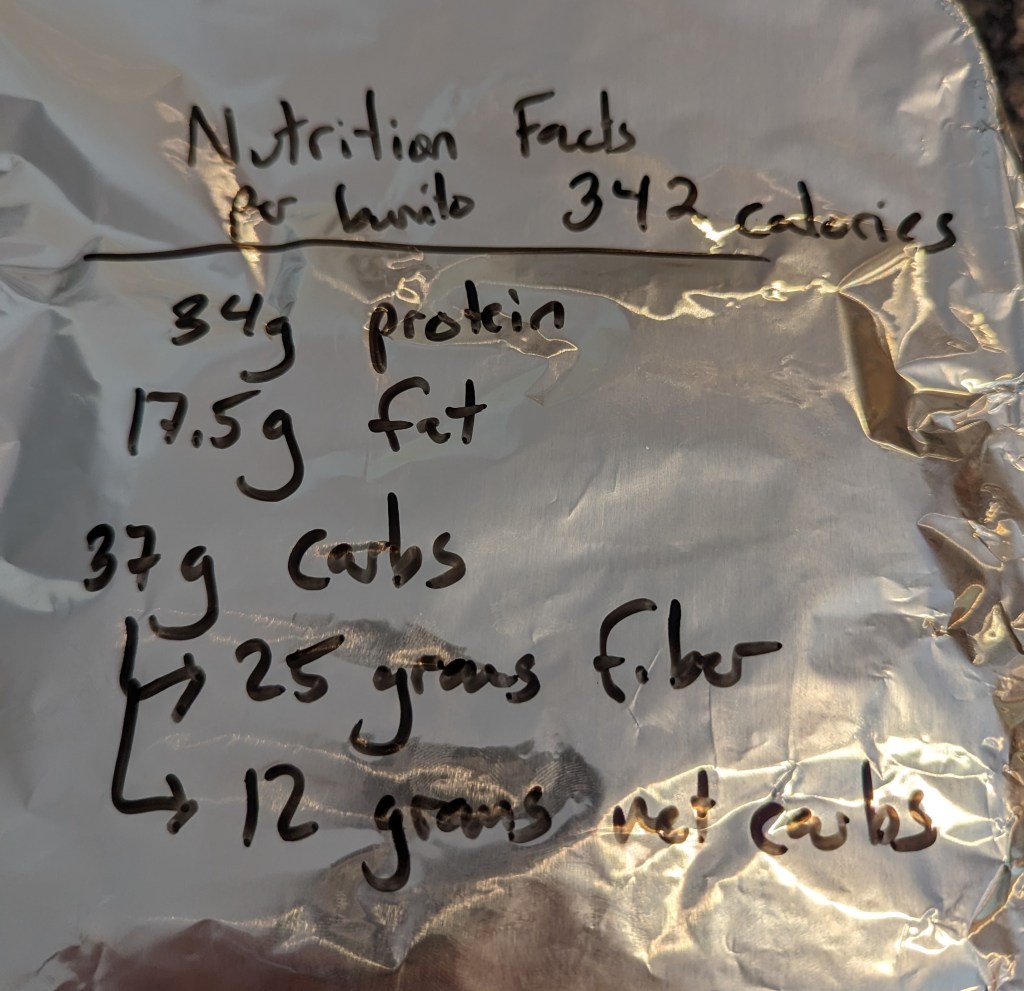
I assemble the burritos as in the table below, spray them with some vegetable oil spray, and brown them in a pan. They can then be stored in the fridge and reheated for up to a week. I would advise separating them with some wax paper or parchment paper to keep them from sticking.
For each burrito, I used the following:
| Item | Protein | Fat | Carbohydrates | Fiber |
| 1 tortilla | 6 | 3.5 | 19 | 17 |
| 2 oz brisket | 12 | 4 | 0 | 0 |
| 1 oz cheese | 7 | 9 | 1 | 0 |
| 1/4 cup beans | 8 | 1 | 11 | 6 |
| 1/4 cup tomatoes | 1 | 0 | 6 | 2 |
The grand totals are 34 grams of protein, 17.5 grams of fat, 37 grams of carbs, and 25 grams of fiber. The fiber number is important because we are going to subtract this from total carbs to get just 12 grams of net carbs. Again, fiber is counted in the total carbohydrate count, but is not digested by your body so does not contribute to total calories. More importantly, it is the fodder of your gut microbiome and is necessary to keep your body healthy. Want to learn more about that? Look here: https://www.ncbi.nlm.nih.gov/pmc/articles/PMC9787832/
Protein contains 4 calories per gram, fat contains 9 calories per gram, and the carbohydrates we can digest contain 4 calories per gram so we can find the actual calorie count by doing some simple math: (34 x 4) + (17.5 x 9) + (12 x 4) = 342 calories per burrito.
Truth be told, this isn’t a lot of calories, most of us need between 1600 and 2000 a day to function well and be healthy. And since there aren’t a lot of non-fiber carbs in this meal, adding a banana or an orange or even an avocado to the meal would not be a bad idea. Personally, I like throwing a poached egg on top and a half an avocado with some salt and lime juice.
You can easily substitute the brisket in this recipe with some shredded chicken, more beans, or a meat substitute. Baked sweet potato is a great flavor booster that I use instead of tomatoes sometimes. I’d like to point out that even without the brisket, this already contains 22 grams of protein, over a quarter of what I recommend as a minimum daily requirement.
I hope some of you will find this helpful. I know a lot of us don’t have time to cook these days, but cooking at home is the easiest way to avoid consuming higher calorie, more processed, and less nutritious food. Its hard to avoid eating out or eating pre-packaged meals, but if we can reduce the number of times we do that per week, it will have a positive impact on our health and quality of life.
Pro tip: If you have teenagers in your house, it’s a good idea to make some with the full carb tortillas and make about 45 of them because they will disappear within just a few days if not hours.
I will hopefully be adding more recipes in the future. I am in the process of setting up a Patreon account for the audio version of my book as well as some tools that can help you on your fitness journey. And coming soon, fitness journals to accompany my book, Fitness without Fear.
 Be Strong, Be Kind